_edited.png)


The Healing Power of Everyday Herbs: Natural Remedies for Daily Wellness
Updated: Mar 15
For most of my life I believed medicine was the only real way to heal.
That probably makes sense considering my father is a doctor. In my family, anything outside conventional medicine was often seen as unreliable. If something was wrong, you went to the doctor, took the prescription and trusted the treatment.
Natural remedies were rarely part of the conversation.
But something changed when I became a mother.
Motherhood has a way of making you question things you never thought about before. What you eat. What you give your children. What you put on their skin. And also how you approach health.
I started reading more about natural remedies and traditional healing methods. At first it was simply curiosity. But the more I learned, the more fascinating it became.
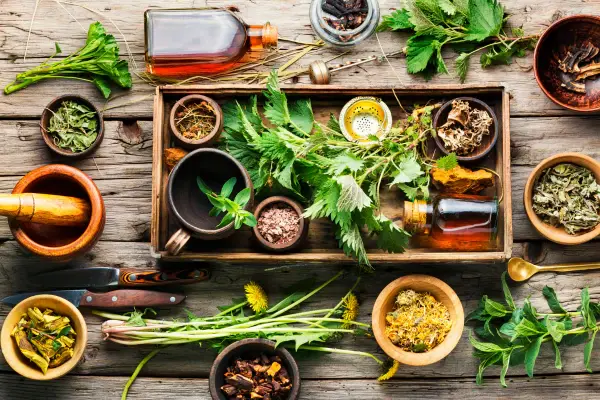
For centuries people relied on plants to support their health. Herbs were part of everyday life. Not miracles, not magic solutions, simply plants used with knowledge and experience.
Of course I want to be very clear about something.
I am not a doctor and I am not able to give medical advice. Modern medicine is incredibly important and in many situations it is absolutely essential.
Herbal remedies should never replace professional medical care when it is needed.
But I discovered that herbs can sometimes be used as prevention or as a complement alongside conventional medicine. And that idea made sense to me.
It felt like reconnecting with something simple that humans have used for generations.
Chamomile

A Gentle Herb for Calm and Digestion
Chamomile is probably one of the most well known healing herbs in the world.
It is gentle but surprisingly powerful.
Chamomile is commonly used to calm the nervous system, support relaxation and improve sleep.
The most common way to use chamomile is as an herbal tea. Simply add one teaspoon of dried chamomile flowers to hot water and let it steep for about ten minutes.
Drinking chamomile tea in the evening can help the body unwind after a stressful day.
Chamomile can also support digestion and soothe stomach discomfort. A cooled chamomile infusion can even be applied gently to irritated skin or tired eyes using a clean cloth.
Sometimes the simplest remedies are the most comforting.
Rosemary

An Herb That Supports the Mind
Rosemary is widely known as a cooking herb but it also has interesting medicinal properties.
For centuries rosemary has been associated with memory and mental clarity.
One of the easiest ways to use rosemary is simply through cooking. Adding fresh rosemary to roasted vegetables, soups or meat dishes is a natural way to incorporate it into daily meals.
Rosemary can also be used as an herbal infusion. Fresh rosemary leaves steeped in hot water create a fragrant tea that may help support circulation and digestion.
Another traditional use is rosemary water for hair care. Boiling rosemary leaves in water, letting it cool and using it as a final rinse after washing hair is believed to stimulate the scalp and strengthen hair.
Ginger

A Root Used Across the World
Ginger has been used in natural medicine for thousands of years.
It is well known for its anti inflammatory properties and its ability to support digestion.
The simplest way to use ginger is to prepare a fresh infusion. Slice fresh ginger root and simmer it in hot water for several minutes. Many people add lemon and honey for flavor and additional benefits.
Ginger tea is often used when feeling run down or during cold seasons.
Fresh ginger can also be grated into soups, stir fries, smoothies or warm drinks.
This small root has been part of traditional healing systems across many cultures.
Turmeric

The Golden Root of Natural Healing
Turmeric has become very popular in recent years but its use goes back centuries in traditional medicine.
Its active compound, curcumin, is known for its anti inflammatory properties.
One common way to use turmeric is in what is often called golden milk. Turmeric powder is mixed with warm milk or plant milk, sometimes with black pepper which helps the body absorb curcumin more efficiently.
Turmeric can also be added to rice dishes, soups or roasted vegetables.
It is a simple way to introduce this powerful root into everyday cooking.
Cinnamon

More Than a Sweet Spice
Cinnamon is often associated with desserts but it also has interesting health properties.
It has traditionally been used to support digestion and help regulate blood sugar levels.
Cinnamon sticks can be added to hot water or tea to create a warming herbal drink.
Ground cinnamon can easily be sprinkled into oatmeal, yogurt, smoothies or warm drinks.
Besides its benefits, cinnamon simply adds warmth and comfort to many foods.
Fenugreek

An Ancient Seed with Many Uses
Fenugreek has been used in traditional medicine for centuries.
It is commonly used to support digestion and is also known among women for supporting milk production during breastfeeding.
Fenugreek seeds can be soaked overnight in water and consumed in the morning.
They are also used in cooking and spice blends in many cultures.
The taste is strong and slightly bitter but the benefits have been recognized for generations.
Peppermint

A Refreshing Herb for Digestion
Peppermint is one of the most refreshing and useful herbs for digestive support.
Peppermint tea is commonly used to help relieve bloating, stomach discomfort and nausea.
To prepare peppermint tea, simply steep fresh or dried peppermint leaves in hot water for several minutes.
The aroma alone can help clear the mind and improve focus.
Peppermint is also commonly used in herbal infusions after meals to support digestion.
Oregano

A Small Herb with Powerful Properties
Oregano is widely used in Mediterranean cooking but it is also known for its antimicrobial properties.
Oregano tea can be prepared by steeping the leaves in hot water.
Some people also use oregano infused oil in cooking or as a natural support during cold seasons.
Even in small amounts oregano contains powerful plant compounds that have long been valued in traditional medicine.
Herbs Are About Small Daily Habits
One thing I realized while learning about herbs is that natural remedies do not need to be complicated.
Supporting your health with herbs often comes down to simple daily habits.
A cup of chamomile tea before bed.
Fresh rosemary in your cooking.
A warm ginger infusion when you feel tired.
A pinch of turmeric or cinnamon added to meals.
These small actions repeated over time can gently support the body.
Relearning What Nature Already Knows
Learning about herbs reminded me that healing has not always been complicated.
For thousands of years people lived closer to nature and understood how plants could support health.
Today we are fortunate to have modern medicine and incredible scientific progress.
But reconnecting with natural remedies can also help us approach health with more awareness.
Sometimes the most powerful support for the body comes from simple things that have been around for centuries.
Nature has always offered help.
We simply need to learn how to listen again.


Comments